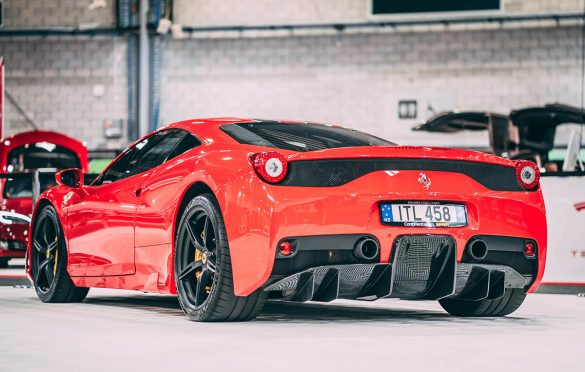
Unlike other types of paint, automotive paint. is specifically designed to spray — and stay — on cars. Paint that’s intended for any other purpose, like a house or a bedroom, will only end in disaster if applied to a vehicle.
Automotive paint is made of three components: a pigment, which gives the paint its color; a thinner, which levels out the consistency of the paint; and a binder to bind the pigment and thinner.
However, shopping for automotive paint oftentimes can be a daunting task. There are different types for different applications. What’s the difference between waterborne and traditional solvent paint? How about single vs two-stage paint systems? Should I use a primer for car painting?
Knowing what to look for in an auto paint will help you find the right match for your needs. Before you order auto paint and end up with undesired results, read on to for more information on the differences between types of automotive paint.
Waterborne vs Solvent Paint
There are two types of auto paint: Waterborne and solventborne. While both types of paint may be used on cars, the difference lies in the material from which they’re made.
Solventborne paints are the traditional auto paints that have been used for many years. They are primarily comprised of a solvent base such as lacquer, urethane or enamel. These paints contain a large amount of VOCs (volatile organic compounds). Because of health and environmental concerns, waterborne paints have become a more popular option than solvent based paints.
Waterborne paints, on the other hand, are primarily comprised of water and contain just around 10 percent solvent. Due to stricter environmental regulations and growing health concerns over solvent borne paints, waterborne paint has become increasingly popular amongst shop owners.
Waterborne vs solventborne: Which is better?
Although some shops have voiced concern over whether or not waterborne paint adheres as well as traditional solvent based paint, modern technology has allowed auto paint manufacturers to produce high-performance water-based paints. For this reason, more and more shops are making the switch to waterborne in order to meet stringent environmental regulations and keep their employees’ best interests at heart.
Leave a Reply